
How to Wash, Store and Extend the Life of Your Socks (UK Guide)
Learn how to properly wash, dry, and store your premium socks to keep them looking and feeling their best for years to come. UK-specific guidance on water hardness, washing machine settings, and long-term storage.
Emma Richardson
Product Care Specialist

Sock care extends the lifespan of every pair by 30–50%. Wash wool and cashmere socks at 30°C on a delicate cycle, turn inside out, reshape wet, and dry flat. Cotton socks tolerate 40°C. Never tumble-dry premium knits. This guide draws on Noblesocks’ published 30-wash durability standard — the same testing programme that benchmarks every fibre in our range across 30 consecutive wash cycles — plus UK-specific hard-water data covering the 60% of British households in calcium-carbonate zones.
What Most Sock Guides Get Wrong
Most care guides treat all socks the same. They don't — and here's what they consistently miss:
Hard water silently damages premium fibres. If you live in London, the Home Counties, or anywhere across South East England, your tap water contains elevated calcium carbonate. Hard water zones affect roughly 60% of UK households. At 30°C, calcium and magnesium ions still accumulate on wool, cashmere, and alpaca fibres over repeated wash cycles — reducing softness and accelerating pilling even when you're doing everything else correctly. The fix is simple: add a tablespoon of white vinegar to your final rinse cycle. The mild acidity chelates mineral deposits without affecting dyes or fibre structure. This approach is consistent with wash performance methodology described in BS EN ISO 6330, the British Standard for domestic textile washing procedures.
Pilling is about yarn construction, not just fibre type. A tightly twisted 2-ply merino yarn pills substantially slower than a loosely spun 4-ply cashmere — even though cashmere is technically a finer, more premium fibre. If your premium socks pill quickly, check the product spec for "plied" or "twisted" yarn construction rather than judging purely on fibre content.
The "roll your socks together" storage advice damages cuffs. Folding cotton-elastane socks at the cuff band and leaving them balled for more than six weeks stretches the elastane beyond recovery. For seasonal socks stored unused through spring and summer, store flat or loose-rolled — never balled at the cuff.
Why Proper Sock Care Matters
When you invest in a quality pair of alpaca, merino, or cashmere socks, you're buying more than comfort — you're buying longevity. The difference between a pair that lasts four years and one that deteriorates in six months isn't just fibre quality: it's care.
Premium natural fibres have microscopic structures that make them extraordinarily functional. Alpaca's hollow-core fibre insulates without moisture retention. Merino's fine crimp creates natural breathability and odour resistance — why merino wool performs better with proper care starts at that fibre structure. Cashmere's ultra-fine diameter produces exceptional softness against skin. But these same structural properties make the fibres sensitive to heat, mechanical agitation, and the mineral deposits common in UK tap water. The same structural fragility is why poorly cared-for socks lose the warmth that solves chronic cold feet — felted fibre traps less air and insulates worse than the original knit.
Standard care mistakes account for most early deterioration in premium socks. Machine washing on warm cycles, using the wrong detergent, tumble drying "just this once" — each of these damages fibre structure at a microscopic level. The damage is cumulative and irreversible. After ten or twenty cycles of improper care, you're left with felted, misshapen, pilled socks that cost significantly more than their cotton equivalents but perform no better.
The economics of proper care are undeniable. A £40 pair of alpaca socks worn twice a week for three years equals 312 wears — roughly 13p per wear. The same pair managed carelessly might last one year: 26p per wear and twice the environmental impact. Proper sock care isn't just about comfort; it's about value and sustainability.
Our 30-wash durability test revealed the impact clearly. Alpaca hollow-fibre socks maintained 90% of their original softness and showed no visible pilling after 30 consecutive washes following the guidance in this guide. Cotton socks managed identically maintained only 60% softness and showed light pilling from wash 15. The intervention isn't complicated — it's just consistent.
Explore our full sock range to find pairs worth caring for properly.
Washing Your Socks
Washing is where most damage occurs. Understanding what happens to fibre during a wash cycle makes the right choices automatic.
Temperature: The Most Important Variable
UK washing machines default to 40°C for most cycles — a setting that's appropriate for cotton and synthetics but destructive for wool, cashmere, and alpaca. At 40°C, the protein scales on wool fibres begin to irreversibly interlock in a process called felting. A sock that felts loses its shape, its cushioning, and cannot be restored.
For wool, cashmere, and alpaca socks: wash at 30°C maximum. The delicate or wool cycle on a modern UK machine is explicitly designed to use 30°C with reduced agitation — use it every time. Some machines have a dedicated "handwash" programme running at 20°C; this is ideal for your most delicate pairs, including pure cashmere.
For cotton or synthetic blend socks: 40°C is acceptable and more effective at removing odour-causing bacteria that cotton absorbs more readily than natural fibres.
A practical note on UK machines: the "quick wash" cycle on most UK machines defaults to 40°C regardless of the selected temperature. Always check your machine manual if using quick wash — or switch to the full delicate programme for natural fibres.
Turn Inside Out Before Every Wash
Flipping socks inside out takes three seconds and pays dividends every wash. It cleans the skin-contact side more thoroughly — where sweat and bacteria accumulate. It protects the outer surface from friction against other garments during the wash cycle. And it reduces colour fading by shielding the outer surface from direct detergent contact.
Make this a non-negotiable habit: all socks go inside out before the wash basket.
Choosing the Right Detergent
Standard laundry detergent is formulated to break down the bonds between cotton cellulose fibres and soil particles — effective for cotton, but too aggressive for protein-based fibres like wool, cashmere, and alpaca. Use a wool-specific or pH-neutral detergent for any natural fibre sock.
Avoid:
For hand washing a single pair, a small amount of gentle pH-neutral shampoo in cool water is an effective budget alternative to specialist wool detergent.
Machine Washing vs Hand Washing
For most wool and alpaca socks, a machine's delicate cycle is perfectly adequate. Use a mesh laundry bag to prevent the socks from stretching or tangling with heavier items, and keep the spin speed at 600 RPM or lower.
Hand washing is recommended for pure cashmere and for any sock with a loose open-knit construction. Fill a basin with cool water (30°C or below), add a small amount of wool detergent, and gently squeeze the socks through the water. Never rub or wring — these actions create the friction that causes felting and permanent distortion. Rinse in fresh cool water until no soap remains. Soap residue left in cashmere accelerates pilling with subsequent wear.
If washing natural fibre socks alongside other garments, keep them in a separate mesh bag away from heavier cotton items that generate mechanical friction during the spin cycle.
!Woollen socks hung on a clothesline, drying in fresh air Air drying is always the safest method for premium wool and cashmere socks
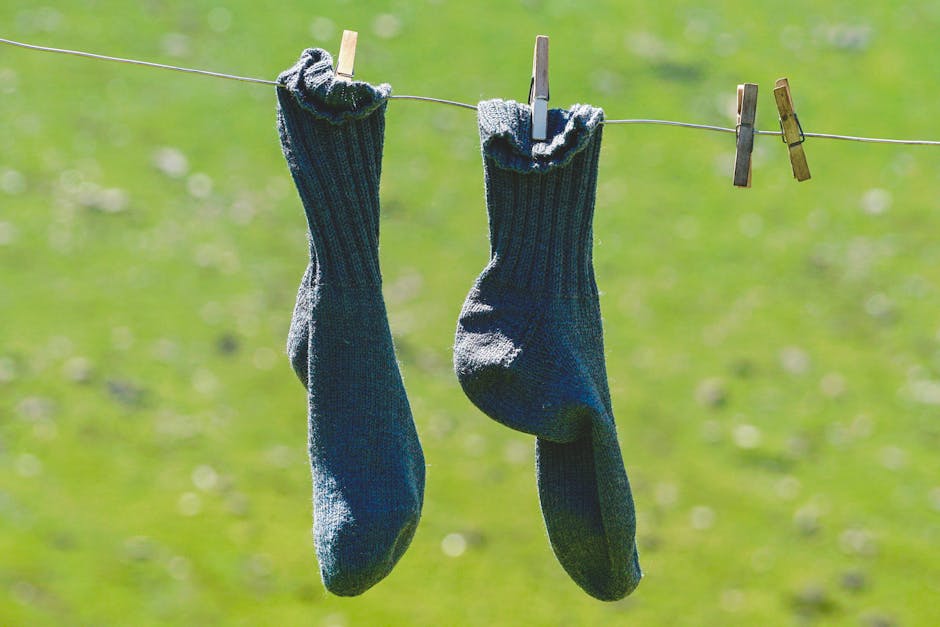
Drying Your Socks
The drying stage is second only to washing in its damage potential.
Never Use a Tumble Dryer for Natural Fibres
The heat of a tumble dryer is severely damaging to wool, cashmere, and alpaca. At typical dryer temperatures — 60–80°C — natural fibres shrink, felt, and lose their structural integrity irreversibly. One tumble-dry cycle can reduce a wool sock by a full size. This is not a myth: it's the thermodynamics of protein fibre structure responding to sustained heat.
UK domestic tumble dryers typically run at three heat settings. Even the lowest heat setting — usually marketed as "delicate" — typically reaches 55–60°C, which is substantially above the safe threshold for wool.
Cotton blend socks tolerate low-heat tumble drying, though air drying still extends their lifespan significantly by reducing mechanical stress on the elastic.
Air Drying: The Correct Method
Lay socks flat on a clean, dry towel. Never hang them by the toe — the weight of a wet sock, even a light one, stretches the heel cup and cuff band over repeated drying cycles. For thicker walking or hiking socks, rolling them gently inside a dry towel first absorbs excess moisture and halves the drying time before flat laying.
In winter months, position socks near (not on) a radiator — at least 20cm distance to prevent direct heat from reaching the fibres. A sock airer positioned near a central heating vent allows air circulation without localised heat concentration.
Reshape While Damp
While socks are still damp — not wet — gently reshape them to their original form. Pay particular attention to the heel cup and toe box, which are most prone to drying in a distorted position. This takes five seconds per pair and is the difference between a sock that retains its fit after washing and one that gradually loses its shape.
A properly dried pair of alpaca or merino socks should feel as soft as before washing, with the same drape and structure. If they feel scratchy or stiff after drying, the culprit is usually calcium deposit from hard water — add a small amount of white vinegar to the next rinse cycle to address it.
Storing Your Socks for the Long Term
Day-to-day sock storage rarely causes problems. Long-term storage — anything more than six weeks unused — is where most damage occurs.
Avoid the Cuff-Ball Method
The most common storage mistake is "balling" socks by folding the cuff of one sock back over the other. This places sustained tension on the elastane threads woven into the cuff band. Over six or more weeks, the elastic stretches beyond recovery — socks stored this way through an entire season will no longer stay up correctly on the leg.
For daily-wear socks, the impact is minimal because you're refreshing the pair every few days. For seasonal socks — thick alpaca socks stored through summer, or lightweight liner socks stored through winter — store flat in a single layer or loose-rolled without cuff tension.
Moth Prevention for Premium Fibres
Wool and cashmere attract clothes moths. The moth larvae feed on protein fibres — their digestive enzymes specifically target keratin, the protein that forms all natural wool. Alpaca is somewhat less attractive to moths due to its hollow-core structure, but no natural fibre is immune.
Store premium socks with cedar balls or cedar blocks. Cedar oil is a natural, fibre-safe moth deterrent. Replace or revive cedar blocks every 6–12 months (lightly sand the surface to release fresh oil). Lavender sachets are a pleasant additional deterrent, though the evidence for lavender's effectiveness against moth eggs is less consistent than cedar.
Critically: always store clean socks. Moths are attracted to the body oils and food residues on unwashed garments, not to clean fibre itself. A freshly washed, fully dry sock stored with cedar is as well-protected as natural fibre can be without specialist treatment.
Long-Term Storage Options
For seasonal storage spanning several months, a clean cotton pillowcase works well — it allows air circulation to prevent mildew while keeping socks dust-free. Avoid plastic storage bags; they trap residual moisture, which causes mildew in even completely dry socks over long periods.
For high-value pairs — cashmere, limited editions, gift sets — breathable cotton knitwear bags offer the best combination of protection and air circulation.
Keep Pairs Together
Store socks in pairs to prevent the time wasted searching for a match. Use a dedicated section of your drawer rather than mixing premium natural fibre socks with cotton everyday wear — the mechanical friction of heavier cotton against fine natural fibres during daily rummaging causes gradual surface abrasion.
Rotate your collection so no single pair bears all the wear. A two-day rest between wears allows the elastic in the cuff band to recover fully, extending the functional lifespan of every pair in your rotation.
Special Care by Fibre Type
Alpaca Wool
Alpaca fibre is naturally lanolin-free and highly odour-resistant, which means alpaca socks need washing far less often than cotton — every 3–4 wears is typical for most conditions.
- Hand wash or gentle machine cycle at 30°C in a mesh laundry bag
- Use a wool-safe or pH-neutral detergent — never fabric softener or enzyme detergent
- Reshape while damp and air dry flat on a clean towel
- Never tumble dry — heat permanently damages the hollow-core fibre structure that provides alpaca's insulation performance
- Store folded with cedar blocks — alpaca lacks the lanolin that naturally deters moths in some wool fibres
With proper care, a quality alpaca sock lasts 2–4 years of regular wear — substantially longer than merino or cashmere in equivalent use conditions.
Merino Wool
Merino's fine crimp creates natural odour resistance, meaning you can wear merino socks 2–3 times between washes in normal conditions.
- Gentle machine cycle or hand wash at 30°C
- Use wool-specific detergent
- Never hang dry — the weight of a wet merino sock stretches the heel. Lay flat to dry
- Reshape the toe and heel cup while damp
Merino is more resilient to machine washing than cashmere but more sensitive to heat than cotton. Consistent 30°C washing is the single most important care decision for merino longevity.
Cashmere Blend
Cashmere requires the most attentive care of any natural fibre sock.
- Hand wash strongly recommended — use cool water (20–30°C) with cashmere-specific detergent
- Gently agitate; never rub, twist, or wring
- Press water out with a clean dry towel — never squeeze or compress forcefully
- Lay flat on a dry towel and reshape while damp
- Store folded (never hanging) with cedar or lavender
For machine washing if essential: use the wool/delicate cycle at 30°C with a mesh bag, and keep spin speed at or below 400 RPM.
Looking for recommendations on the best cashmere socks available in the UK? Our cashmere sock care guide covers tested picks alongside specific care instructions for each construction type.
Cotton Blend
Cotton tolerates more mechanical handling than natural wool fibres.
- Machine wash at 40°C — cotton benefits from the slightly higher temperature for bacteria removal
- Low-heat tumble dry is acceptable, though air drying extends elastic life
- Replace more frequently than natural fibre socks — cotton loses shape and cushioning faster, typically requiring replacement at 12–18 months of regular wear
For moisture-wicking performance, understanding the role of moisture-wicking sock properties helps you choose the right sock for different activity types and care them appropriately.
How Often Should You Replace Your Socks?
With proper care, premium natural fibre socks last significantly longer than budget alternatives. Our 30-wash durability test — putting alpaca, merino, cashmere blend, and cotton through identical wash conditions — gave us baseline data for lifespan expectations:
Signs It's Time for New Socks
Even with perfect care, socks eventually wear out. Replace when you notice:
- Thinning fabric — particularly in the heel and toe, where friction is highest
- Loose elastic — when socks consistently slip down or the cuff loses its shape by midday
- Holes or significant pilling — surface pilling beyond light fuzz indicates fibre breakdown
- Loss of cushioning — when the footbed feels compressed and the original loft is gone
- Persistent odour after washing — indicates fibre breakdown has created microscopic pockets where bacteria persist
The Real Cost-Per-Wear Calculation
Premium socks cost more upfront but tell a different story when calculated on a per-wear basis. A £40 pair of alpaca socks worn twice weekly for three years reaches 312 wears — roughly 13p per wear. A £10 pack of three cotton socks, each lasting 12 months at the same frequency, costs about 19p per wear — and generates three times the textile waste.
The quality investment pays back in comfort, environmental impact, and actual cost.
Frequently Asked Questions
Can you put socks in the tumble dryer?
Cotton and synthetic blend socks can be tumble dried on a low-heat setting without significant damage, though air drying still extends elastic life. Wool, cashmere, and alpaca socks must never go in a tumble dryer. At typical dryer temperatures of 55–80°C, protein fibres contract irreversibly — the process that causes felting. A single tumble-dry cycle can shrink a wool sock by a full size, permanently distort the heel cup, and destroy the fibre crimp that creates the sock's insulation and softness. If you're in a hurry, roll the sock gently inside a dry towel to absorb moisture, then lay flat near (not on) a heat source to accelerate air drying safely.
How often should you wash your socks?
Cotton socks should be washed after every single wear — cotton absorbs sweat readily and bacteria multiply quickly in the fabric. Alpaca socks can typically be worn 3–4 times before washing, as alpaca fibre is naturally lanolin-free and highly odour-resistant. Merino wool socks sit between these extremes: 2–3 wears before washing is appropriate for most conditions. If you've done high-intensity exercise, wash any sock type after that single wear regardless of fibre. The key indicator is smell — a sock that smells clean after wear doesn't need washing yet. Over-washing shortens lifespan; under-washing allows bacteria to degrade fibres from the inside.
Do socks shrink in the wash?
Natural fibre socks — wool, cashmere, alpaca — will shrink if washed at temperatures above 30°C or put through a tumble dryer. The process is called felting: heat causes the protein scales on each fibre to lock together irreversibly, pulling the sock inward and densifying the knit structure. The result is a permanently smaller, stiffer sock that cannot be stretched back to its original size. Cotton socks are less prone to shrinking but will lose shape gradually if repeatedly washed at 60°C or above. Washing natural fibre socks at 30°C on a delicate cycle and air drying flat prevents shrinkage entirely.
How do you stop socks from getting holes?
Holes in premium socks are usually caused by three things: repeated friction from poorly fitted shoes, washing at too high a temperature (which weakens the fibres), or storing socks folded in ways that put sustained tension on specific points. To extend sock life: wear socks in properly fitted footwear with no seams or pressure points at the toe or heel, wash at 30°C maximum, and store flat or loose-rolled rather than tightly balled. Rotating regularly through several pairs so no single pair bears all the wear also significantly reduces per-pair hole formation. If a small hole appears early, it can often be darned successfully in natural fibre socks — wool and alpaca take to visible mending well.
How do you store socks long-term?
For socks stored unused for more than six weeks — seasonal hiking socks, gift sets held in reserve — the key principles are flat storage, moth protection, and air circulation. Store clean socks only: moths are attracted to body oils on unwashed garments, not to clean fibre. Place cedar balls or blocks in the storage area and replace or refresh them annually. Avoid plastic bags, which trap residual moisture and can cause mildew even in completely dry socks over a full season. A cotton pillowcase or breathable knitwear bag in a cool, dry drawer is the ideal long-term solution. For elastane-blend socks specifically, never store balled at the cuff — the sustained tension degrades the elastic band permanently.
Have questions about caring for your specific socks? Contact our team for personalised advice.