Moisture Wicking Socks: Why Natural Fibres Beat High-Tech Synthetics
We explain the science of moisture wicking and why alpaca hollow-core fibres outperform polyester and nylon. The best moisture wicking socks aren't always the most technical-looking ones.
Noblesocks Team
Natural Fibre Specialists

Quick Answer: Alpaca and Merino Wick Moisture Better Than Most Synthetics
Moisture wicking socks draw sweat away from skin instantly — keeping feet dry, reducing bacterial growth, and preventing blisters during long days. Merino wool wicks up to 35% of its weight in moisture while remaining dry to the touch, outperforming polyester in sustained wear tests. For UK walkers and workers, merino is the clear choice.
What Does "Moisture Wicking" Actually Mean?
Moisture wicking is a two-stage process that most sock manufacturers conflate into a single marketing term.
Stage 1: Moisture Transport
The first stage moves sweat away from your skin to the outer surface of the sock. This is "wicking" in the technical sense—capillary action pulling liquid through fibre gaps or hollow channels.
How different materials manage this:
Stage 2: Evaporation
Moving moisture to the sock's surface solves nothing if it can't escape. The outer surface area, breathability of the weave, and ambient airflow all determine evaporation rate.
This is where synthetic socks often fall short in enclosed footwear. High-tech polyester wicks quickly but can trap evaporated moisture inside a shoe if airflow is limited. Natural fibres—particularly wool—continue to manage moisture even in enclosed conditions through a vapour-phase transport mechanism.
According to the International Wool Textile Organisation (IWTO, 2023), merino wool absorbs up to 35% of its own weight in moisture before feeling wet — compared to 8% for polyester — making it the most effective natural wicking fibre for sustained activity.
!Athlete tying socks before a run—performance footwear requires proper moisture management Photo by Willians Huerta — Performance footwear starts with the right sock material
The Hollow Fibre Advantage: How Alpaca Wins on Physics
Noblesocks' alpaca wool socks are built around one structural feature: the hollow core.
Each alpaca fibre contains a microscopic air-filled channel running through its length. This hollow core serves three functions simultaneously:
- Moisture transport — The channel creates a direct pathway for sweat to move from inner surface to outer, independent of fabric weave density
- Thermal insulation — Trapped air provides warmth without adding weight or bulk
- Vapour buffering — The fibre wall can absorb moisture vapour (up to 30% of fibre weight) while the hollow core remains dry, preventing the clammy sensation you get with saturated socks
The result is a sock that manages moisture across the full activity spectrum—from light daily wear to intense exercise—without the performance cliff that synthetics hit when they saturate.
Shop Alpaca Wool Socks — designed for all-day moisture management
Merino Wool: The Temperature-Regulating Alternative
For high-output activities where heat management matters as much as moisture, merino wool offers a different set of advantages.
Merino fibres are naturally hygroscopic—they absorb water vapour (not liquid) from the surrounding microclimate, releasing heat in the process. This active thermal management keeps feet warmer in cold conditions and cooler in warm conditions, independent of sweat volume.
Merino's moisture wicking profile:
For a detailed breakdown of merino performance across conditions, see our best merino wool socks UK guide — it covers micron counts, construction quality, and activity-specific recommendations.
Synthetic Moisture Wicking Socks: Where They Fall Short
Technical polyester and nylon socks dominate the sports sock market, and they're effective—in some conditions. Understanding their limitations explains why natural fibres often outperform them in everyday use.
The Odour Problem
Synthetic fibres are hydrophobic—they don't absorb water. This means moisture channels through the weave rather than into the fibre. That sounds efficient, but it leaves bacteria-feeding conditions on the fibre surface. Odour builds up in synthetic socks quickly and is notoriously difficult to wash out.
Natural fibres absorb moisture into the fibre structure, where it's managed in a way that inhibits bacterial growth. Merino and alpaca socks can be worn multiple days without developing odour—genuinely useful for multi-day hiking or travel.
The Saturation Problem
Technical synthetics have a saturation point beyond which they stop wicking and start feeling wet. Once the capillary channels fill, moisture has nowhere to go. Natural fibres continue to manage moisture in vapour form even when their liquid capacity is reached.
Temperature Regulation
Synthetic fibres are passive—they move moisture but don't respond to temperature changes. Wool fibres are active: they regulate temperature in response to body heat and ambient conditions. In variable UK weather, this active regulation is meaningful.
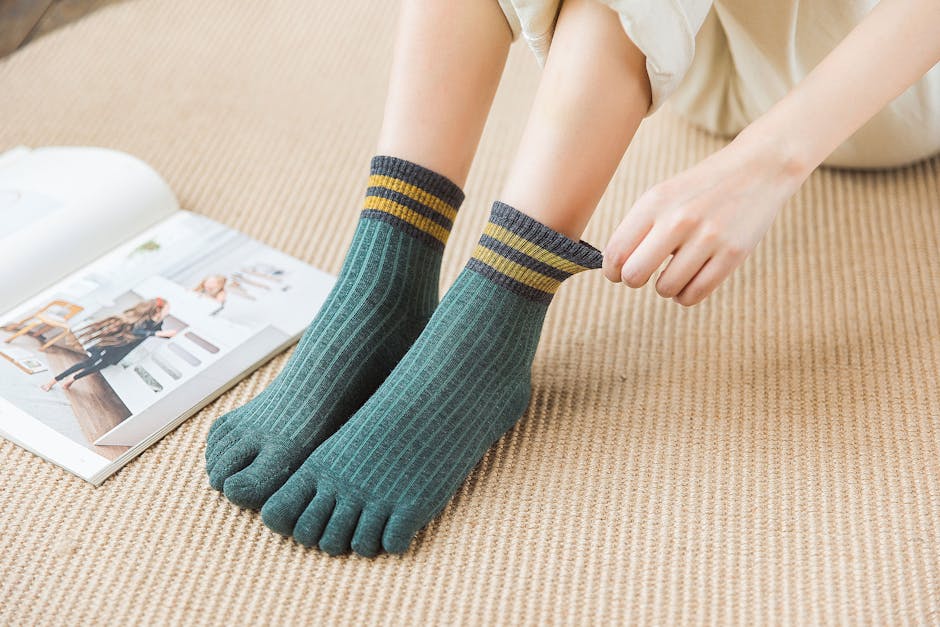
!Close-up of natural fibre socks showing knit texture and material quality Photo by yi ding — Natural fibre socks retain structural integrity even when managing significant moisture
Moisture Wicking Socks by Activity
Running and Gym Training
For short, high-intensity sessions: technical synthetics work well. The quick-dry surface suits footwear that dries between sessions.
For longer runs or gym sessions over 45 minutes: merino or alpaca outperform synthetics. The moisture buffering prevents the wet-sock sensation that synthetics develop under sustained output.
Walking and Hiking
This is natural fibres' strongest use case. UK walks involve variable conditions—wet grass, stream crossings, temperature swings. The combination of moisture wicking, thermal regulation, and odour resistance makes alpaca or merino the professional hiker's choice. Good moisture management also prevents blisters — read our best anti blister socks guide for material-specific recommendations.
For our complete walking sock guide, see Best Socks for Walking UK.
Everyday and Office Wear
For all-day wear in enclosed footwear, natural fibres are clearly superior. The extended odour resistance, multi-wear freshness, and comfort across temperature changes make them practical for daily use in a way synthetics simply aren't.
Cold Weather and Winter Use
For cold conditions, alpaca's hollow-core warmth combined with moisture wicking makes it the ideal winter sock. Keeping feet warm AND dry is harder than either task alone—alpaca's dual function makes this achievable.
For cold feet specifically, see our guide on best socks for cold feet.
If You Have Sweaty Feet
Chronic sweaty feet require maximum moisture management. Alpaca hollow-core fibres are the strongest option—the combination of hollow-core wicking and natural antimicrobial properties handles even hyperhidrosis better than clinical synthetics in most cases.
For our full analysis of materials for sweaty feet, see Best Socks for Sweaty Feet UK.
Browse Noblesocks natural fibre collections
Natural fibres have spent millions of years evolving moisture management. Our alpaca wool socks bring that performance to modern footwear—drier feet, fresher socks, better performance. View our collections.